Real prices for common builds
These are the ranges on our own price list, for work scoped in a written plan and usually delivered at a fixed price. We are a US company with delivery from Islamabad, so treat them as one firm's prices rather than the market's, but they show how the size of a build moves the number.
- A website built or rescued: $1.5K to $5K, usually 1 to 5 weeks
- A two-week prototype to test an idea: $2.5K to $5K
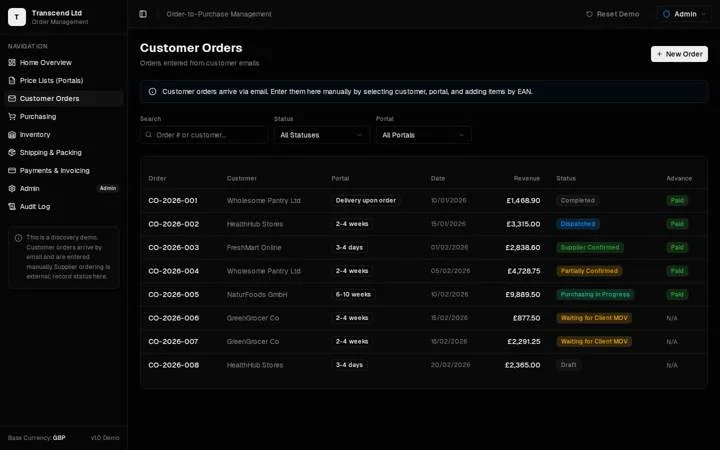
- An operational platform, such as an internal tool or order system: $2K to $6K, usually 2 to 4 weeks
- A client portal: $3K to $8K
- A SaaS product or MVP: $3K to $15K
- Dashboards and reporting: $2K to $5K
- An automation that replaces a repeat task, such as an intake and inbox agent: $1.5K to $3K
What moves the price up or down
Software is priced by how much has to be decided and built, not by how important it is. The same handful of things decide where a project lands in its range.
- How many kinds of user it has, and what each is allowed to do
- How many other systems it must talk to: payments, accounting, a point of sale, an existing database
- Whether old data has to be moved in and cleaned on the way
- How much design it needs beyond a clean, standard interface
- Rules that must be followed exactly: tax, compliance, audit trails
Why scope matters more than hourly rates
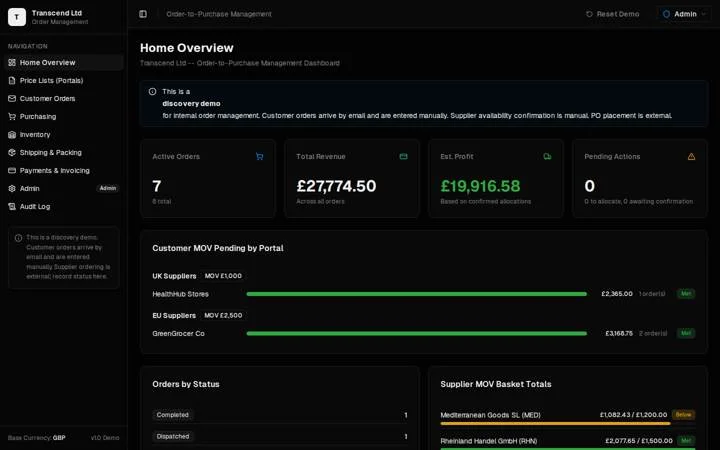
A cheap hourly rate on a vague scope usually costs more than a higher one on a clear scope, because the hours are spent finding out what was meant. On the Transcend project, 59 requirements were reviewed across 17 sections, and the review after the first demo turned into 13 implementation items. That work is what lets a price be fixed.
The reverse also holds: when the scope is genuinely small, software can be fast. For our own cafe in Islamabad, the operations system went from its first commit to a working point-of-sale MVP in one week, because the problem was clear and one person owned the decisions.
Fixed price or by the hour?
A fixed price suits a defined build with a clear finish. Hourly or monthly suits work where the list keeps changing: a product under active development, or a developer working inside your team. For that, our developers run $10 to $40 an hour by seniority, and a dedicated developer $1.6K to $4.8K a month, part time to full time.
Whichever you choose, ask what happens when the scope changes. A fair answer is a written change with its own price before the work is done, not a surprise on the invoice.
The costs after launch
The build is not the whole cost. Budget for hosting, domains and any paid services the software uses, and for care: updates, fixes and small changes. A monthly care plan with a cap keeps that predictable; running it yourself is also an option if you own the code and the accounts.
How to spend less
Start smaller than you think. A prototype or a single automation tests the idea for a fraction of the full build, and the full build is cheaper once the questions are answered. Check whether an existing product already does most of the job. And put a number on the problem first: if a task costs a few hours a week, the payback calculator shows how long a fixed-price fix takes to pay for itself.
Getting a number you can plan around
Describe the problem in a few sentences and ask for a written plan before any price. A good plan says what will be built, what will not, how long it usually takes and what it costs. Ours is free, needs no call and usually comes back within 2 business days.