AutomationWholesale and manufacturing
Order emails that turn themselves into quotations
An Accel Automation presales prototype
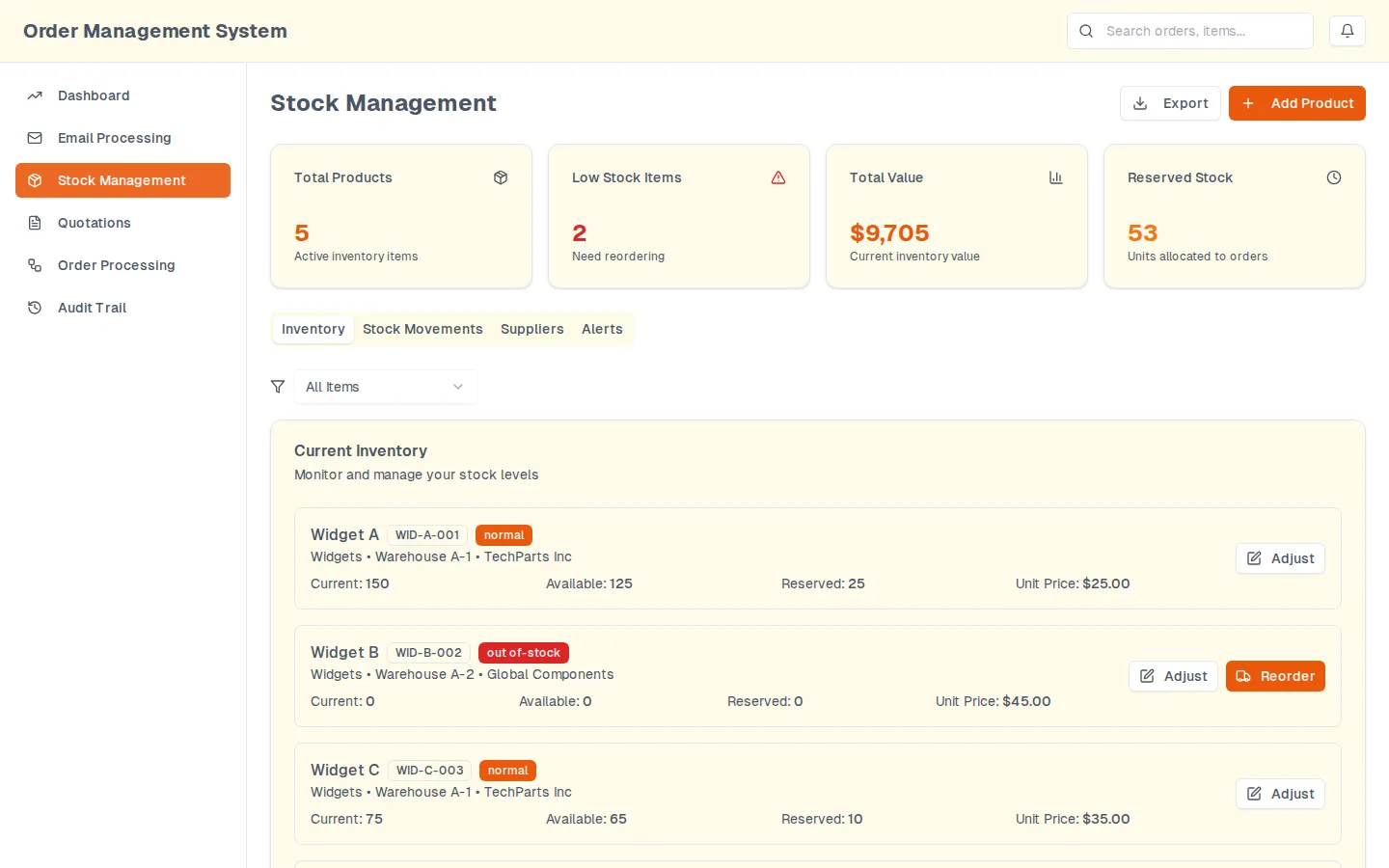
3 quantities per stock item: on hand, available and reserved
Tutorial · About 5 minutes
Pick a sample order email and watch each line become an order line, with notes on what a person still checks.
Every order that arrives as an email is read, typed into the system and checked against stock by a person. That is usually a few minutes an order, and the mistakes show up later as a wrong shipment or a missed one.
Automating it does not mean trusting a machine with every order. It means a machine reads the easy ones and a person checks the rest.
Pick a sample message, or paste your own, then read it. Everything runs in your browser; nothing is sent.
Sample data.
Load one of the invented messages, or paste one of your own. Real text is fine: it stays in this tab.
| Item | Qty | Line | What happens |
|---|---|---|---|
| Widget A (WID-A-001) | 12 | $300.00 | 12 reserved against this order |
| Widget C (WID-C-003) | 30 | $1,050.00 | 30 reserved against this order |
| Connector kit (CNK-D-004) | 6 | $75.00 | 6 reserved against this order |
Quotation subtotal $1,425.00 at catalog prices, on every line that matched an item, including the ones there is no stock for. Availability is the column beside it, not a reason to leave a line off a quote. Sample figures.
Nothing on this message. That is what a clean order looks like, and it is the minority of them.
Try the forwarded thread, the line naming something that is not in the catalog, and the message with no order in it. A good parser says "I could not read this line" instead of inventing a product.
A line in an unexpected shape, an item the catalog does not have, or a reply that is not an order at all.
How it is caughtAnything unreadable goes to a person with the line highlighted; nothing is drafted from a guess.
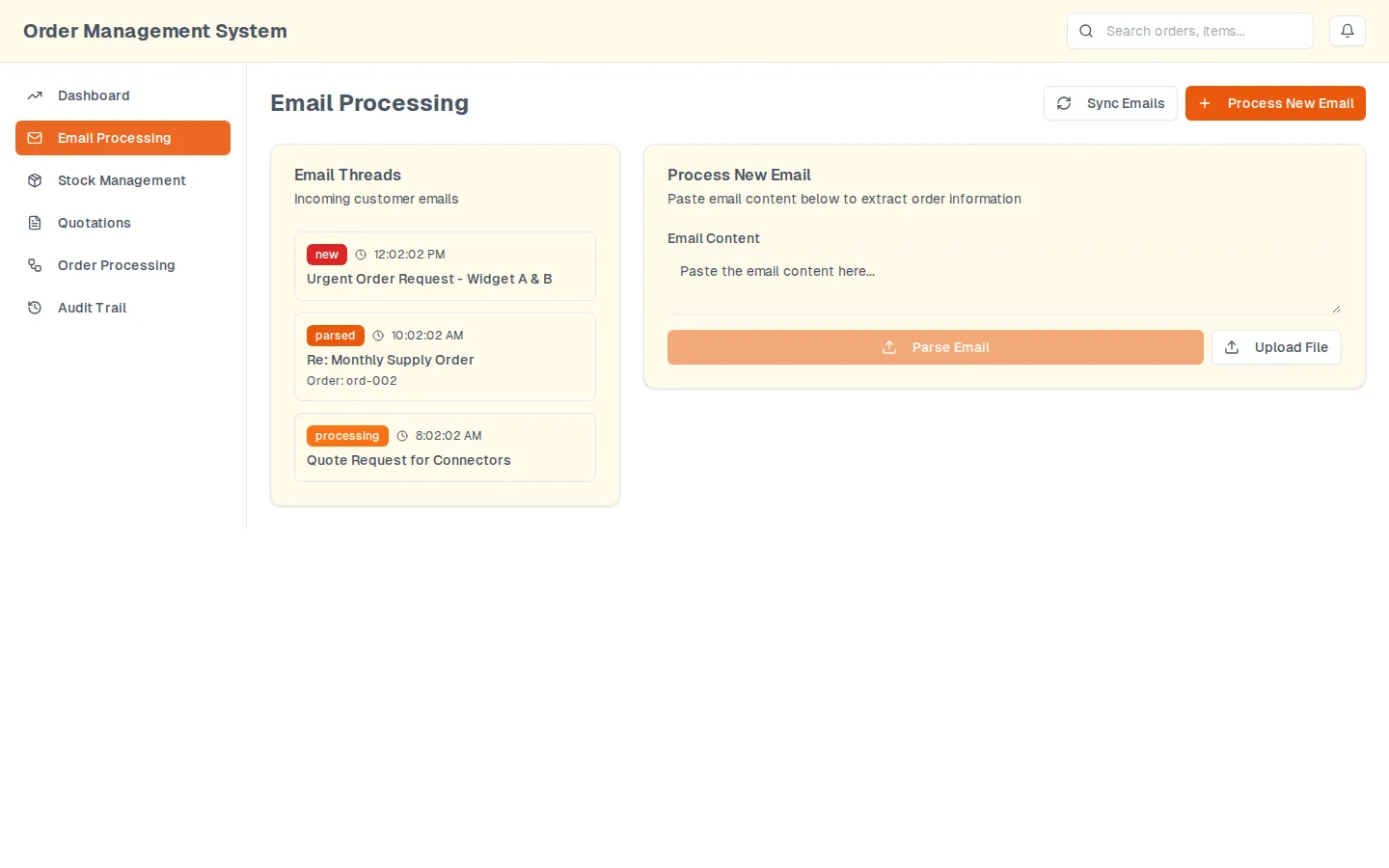
A live system adds the stock check, the quotation and the hand-off to a person for anything it could not read. This is the client project it comes from.
AutomationWholesale and manufacturing
An Accel Automation presales prototype
3 quantities per stock item: on hand, available and reserved
Next step
Tell us what is still done by hand. The free plan usually comes back within 2 business days and says what to fix first, at a fixed price.