AutomationWholesale and manufacturing
Order emails that turn themselves into quotations
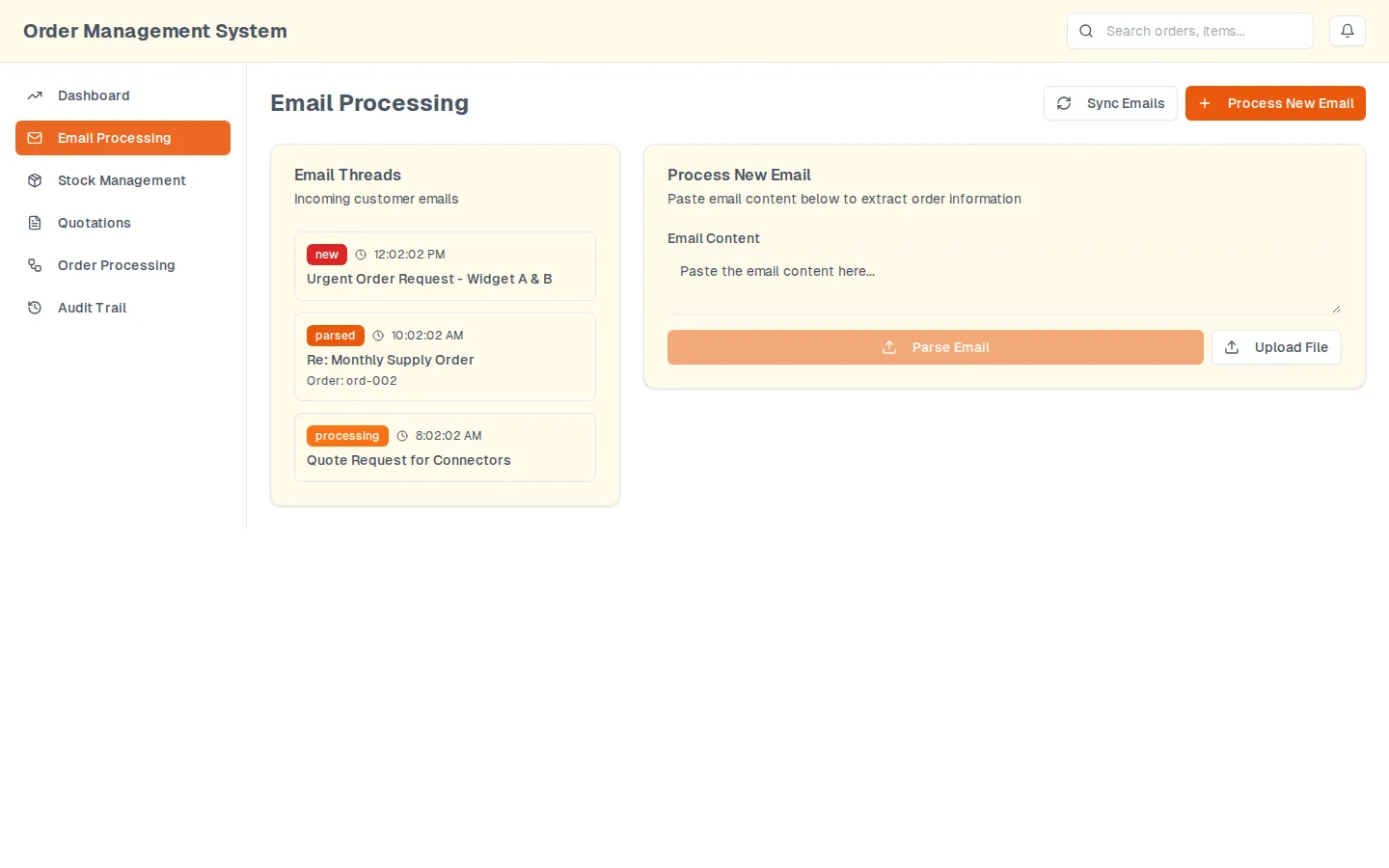
An Accel Automation presales prototype
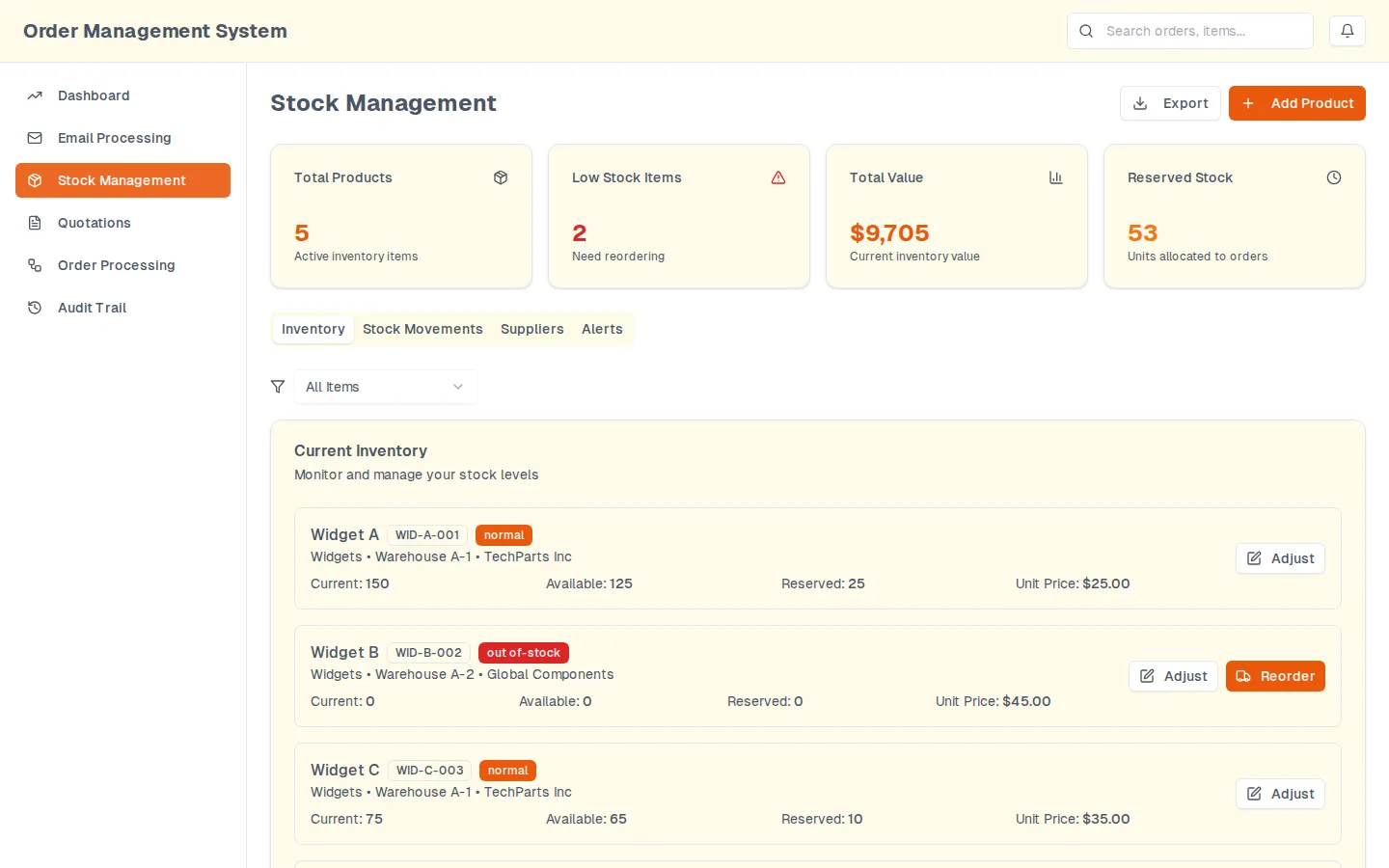
3 quantities per stock item: on hand, available and reserved
Automation · 11 min read
An AI agent for business reads incoming work, decides within rules you set, acts in your systems and hands anything unclear to a person. Start with one repetitive, text-heavy process that is easy to check, a written list of limits and a short pilot.
This guide is for owners and operations leads who want a plain answer. It covers what an agent is, seven workflows that tend to be worth automating first, the jobs to leave alone, and how to scope a pilot. The examples come from Qelv's own site and are labeled as a client project, a prototype or an offer, so you can see what is proven and what is a demonstration.
Three kinds of software get called "AI" in sales pages, and they solve different problems.
| Topic | Rule-based automation | Chatbot | AI agent |
|---|---|---|---|
| What it does | Follows a fixed path: if X, then Y | Answers questions in a conversation | Reads work, decides within limits, acts in your systems |
| Handles messy input | No. Breaks when the format changes | Somewhat, but only replies | Yes, within limits. Unreadable items go to a person |
| Takes action | Yes, the same action every time | Usually not | Yes: creates the record, drafts the quote, books the slot |
| Typical example | Copy a form submission into a spreadsheet | A site widget that answers shipping questions | Reads an order email, matches lines to your catalog, drafts the quote |
| Cost to run | Low | Low to medium | Medium, and it needs monitoring |
The line between them is judgment on messy input. A rule can copy a form into a sheet. An agent reads the form, works out which customer and which order it belongs to, drafts the reply, and flags the one with a missing price instead of guessing.
That last part matters more than the intelligence. A useful agent is defined as much by what it refuses to do as by what it does. If it cannot say "I could not read this line" and route it to a person, it is not ready to touch your customers.
The cheapest tool that works is the right one. A rule-based tool such as Zapier or Make is often the correct answer. Agents earn their cost when the input is unstructured, the decision needs reading comprehension, or the system you write into has no clean connector.
These seven share a profile: the work arrives as text or a file, a person currently retypes or re-reads it, the rules are mostly writable, and a wrong result is cheap to catch. For each, the label says what stands behind the example.
Wholesale and distribution desks read an order email, check stock, retype the lines into a quotation and remember to reserve the stock. An agent can read the email (or an attachment), match each line to your product catalog, reserve stock and draft the quote, logging every decision including the failures.
What stands behind it: a Qelv presales prototype, not a delivered client system. It tracks three stock quantities per item (on hand, available and reserved) and writes an audit trail. You can paste a sample email into the order-intake tutorial and watch it work on invented data, and read the case study. The tutorial is candid that a perfectly clean order is the minority, which is why the hand-off to a person is part of the design.
What a person still checks: unmatched lines, instructions written in prose ("send whatever you have") and anything that is not an order.
Insurance, logistics and finance teams key data off forms into another system. An agent can return named fields as structured data, which a person or a downstream system then checks.
What stands behind it: a Qelv prototype for Thai Reinsurance that returned 46 named fields as JSON from one scanned form in Thai and English with stamps and handwriting, after a standard OCR pass fell short. The next stage, entering the data into SAP through GUI scripting, was designed but not delivered. See the case study. One worked sample is not a production accuracy rate, and you should ask any vendor for accuracy measured on your own documents.
Some teams pay people to run the same search on a portal every morning and download each matching document.
What stands behind it: a Qelv client project for a team working US county court records: a Selenium-driven search of one county clerk-of-court system with PDF retrieval, retries and structured output, built in late 2023. See the case study. To be accurate, this is closer to a robot than to an AI agent, and that is fine. Pick the simplest tool that does the job. If a workflow like this reads someone else's website, check the site's terms and applicable law first. Qelv's piece on production scraping pipelines covers what keeps one running.
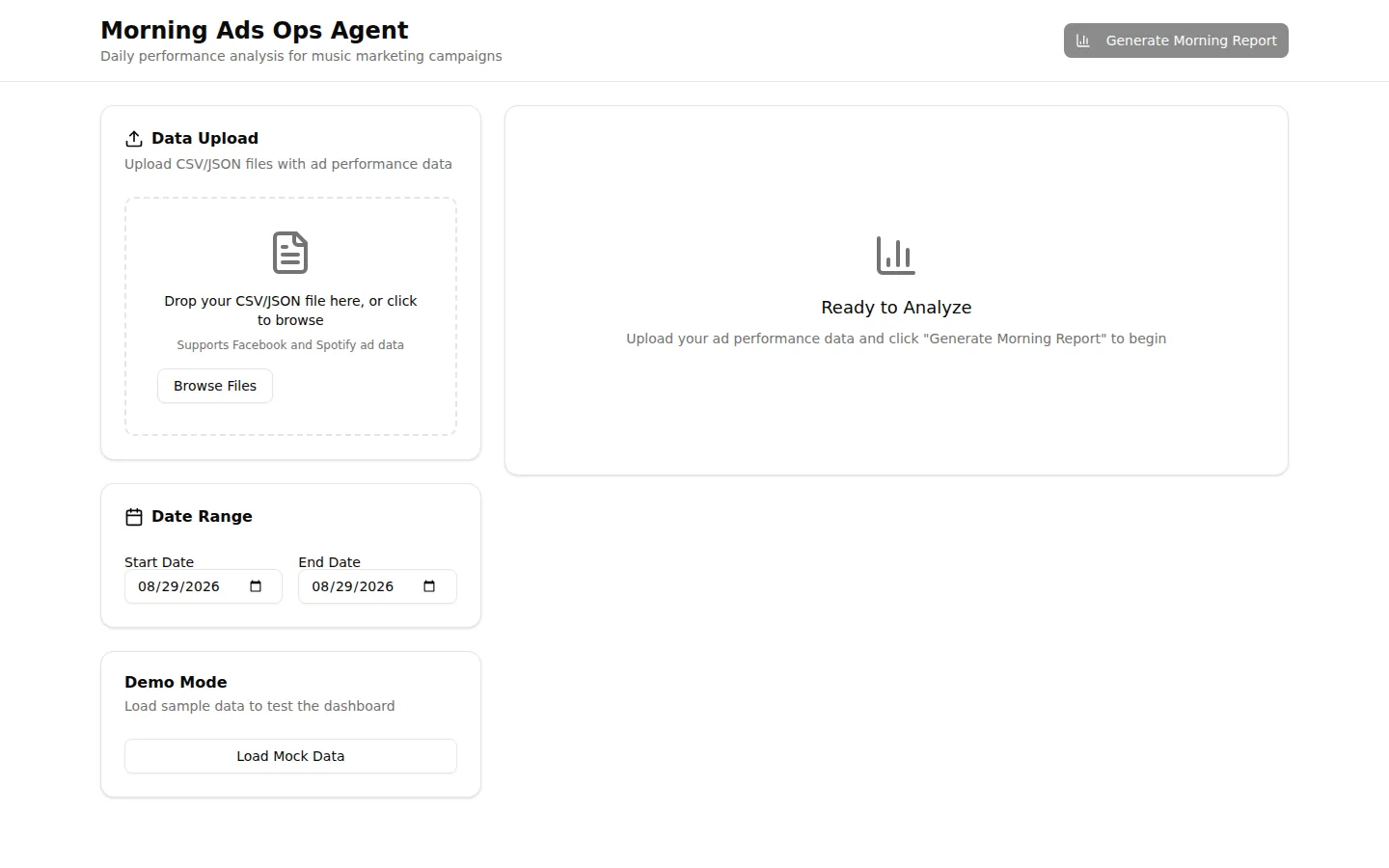
Someone exports yesterday's campaign numbers, pastes them into a sheet and writes the same summary, often as the first hour of a skilled person's day. An agent can read the exports, compare each campaign with the day before and put the rows that need attention at the top.
What stands behind it: a Qelv prototype for ads-ops teams. In the browser demo, the rules are printed rather than hidden: spend of $100 or more with no conversions, cost per acquisition more than 1.4 times the day before, click-through rate under 1 percent, and a campaign that reported yesterday and reports nothing now. The decisions stay with the operator. See the case study.
Quote requests, contact forms and shared inboxes slow down because every message needs a human to read it and decide where it goes. An intake agent answers what it can, routes the rest to the right person the same hour and shows its reasoning.
What stands behind it: a published offer, the intake and inbox agent, at $1.5K to $3K, usually fixed-price, with a typical build of 2 to 3 weeks. Anything the agent cannot judge is escalated visibly rather than dropped.
For businesses that live on calls and bookings, an agent on web chat, WhatsApp or the phone can answer common questions, book appointments and write the outcome back to your system.
What stands behind it: a published offer for a voice and chat agent pilot in English or Arabic, quoted after the free plan, run as a time-boxed pilot with the success measures agreed first. Qelv's site also shows a scoping sample for a resort guest-service system on WhatsApp, a proposal rather than a delivered system, to illustrate what a pilot scope contains.
Numbers pulled from three systems and pasted into one sheet every Monday are the classic hidden cost. An automated report reads the systems directly and lands in your inbox before anyone asks.
What stands behind it: a published offer, the Monday report, at $1K to $2.5K, usually fixed-price, in 1 to 2 weeks. It is the smallest priced step on the automation page, and a sensible first project because the result is easy to check against the report you already trust.
An agent is a poor fit when:
The most important design choice is not the model. It is how much the agent may do without a person. A simple way to set it:
| Level | What the agent does | Good for |
|---|---|---|
| 1. Suggest | Drafts the reply, the quote or the record. A person sends or saves it | First weeks of any pilot; anything involving customers |
| 2. Act, then report | Takes low-risk actions and lists what it did for review | Routing, tagging, filing, internal reports |
| 3. Act and escalate | Handles clear cases alone, sends unclear ones to a person | Mature workflows with measured accuracy |
Write the limits down before the build. For each agent, the list should say what it may do on its own, what it must hand to a person, and what it never touches unless you say so, such as refunds or price changes. Handoffs should be visible: a person sees what the agent read, decided and why it stopped.
Two operational points belong on that list too. Agents fail quietly if nobody is watching, so monitoring is part of the build, with an alert the same day rather than a surprise at month end. And if the agent calls a third-party AI model, your input data goes to that provider, so ask which model, where the data goes and on what terms. Qelv says its agents run on your cloud, tools and accounts so data stays where it already lives; confirm the specifics in writing.
A pilot is a small, time-boxed version of the agent on one process with measures agreed before you start. Here is a sequence you can run whether you work with Qelv or anyone else.
These are one firm's published figures, not a market benchmark. Qelv prices agent and automation work as sprints, usually fixed-price and agreed before work starts:
| Offer | Published price | Typical build time |
|---|---|---|
| The Monday report | $1K to $2.5K | 1 to 2 weeks |
| System-to-system sync | $1.5K to $3K | 1 to 2 weeks |
| Intake and inbox agent | $1.5K to $3K | 2 to 3 weeks |
| Before-you-hire automation sprint | $1.5K to $3.5K | 2 to 3 weeks |
| Voice or chat agent pilot | Quoted after the free plan | Set in the quote |
The price moves with the number of systems involved, how messy the input is and how much the agent may do unchecked. Monitoring after launch is an optional monthly care plan, not a condition of the build. See the pricing page for current ranges.
Three cases. If a subscription tool already does your job and connects to your systems, buy it; Qelv's own plan is meant to say so when that is true. If you need a regulated-industry agent with formal certifications or on-site delivery, ask any vendor, Qelv included, what they can document before you go further. And if you want a large, open-ended "AI transformation", Qelv's model of small priced steps will feel narrow; it is built for one process at a time.
If you can name the process that eats the most hours, send it over. Qelv replies with a free written plan, usually one page and usually within 2 business days, with no call needed. It says what to automate, what stays with a person, the hours it returns and the price. If nothing is worth automating yet, the plan says that too. You can start on the automation page, see how projects run, or send the process directly.
Proof
AutomationWholesale and manufacturing
An Accel Automation presales prototype
3 quantities per stock item: on hand, available and reserved
AutomationMarketing and sales
A prototype we built for ads-ops teams
A CSV or JSON export becomes a per-campaign report, compared across dates, with the lines that need attention at the top.
Questions
They are software workers that read incoming work, decide what to do within rules you set, take the action in your systems and hand anything they cannot judge to a person. They differ from chatbots, which mostly answer questions, and from rule-based automations, which follow one fixed path.
It depends on the number of systems involved, how messy the input is and how much freedom the agent has. On Qelv's published list, an intake and inbox agent is $1.5K to $3K and the Monday report is $1K to $2.5K, usually fixed-price. A voice or chat pilot is quoted after a free plan. Other providers price differently, so compare scope, not just numbers.
Usually it takes over the rules-based part of a role, not the whole role. Judgment, relationships and exceptions still need a person. A practical use is to automate the repeatable part of an open role before you fill the seat, so the hire starts further along.
Only with its limits written down and its work visible. Define what it may do alone, what it must hand off and what it never touches. Run it in your own accounts where possible, monitor it, and ask in writing which third-party models see your data.
Next step
Tell us what you are working on. The free plan usually comes back within 2 business days and says what to fix first.
Next from here
Off the main path